Modern safety management has evolved beyond manual tracking. The old way of using paper forms and complex spreadsheets is too slow for today’s fast-paced work environments. It creates a “data gap” where risks stay hidden until an accident actually happens.
To stay ahead, organizations are moving toward automated systems that simplify the reporting process without losing the detail required by regulators. Compliance management software plays a critical role here.
It allows teams to capture incident data instantly, ensures all legal requirements are met automatically, and turns raw information into actionable insights. By reducing the administrative burden, these programs help safety leaders focus on preventing risks rather than just documenting them.
This approach ensures your organization stays audit-ready while keeping the front-line workers engaged in the safety process.
The Friction Problem: Why Good People Skip Reports
People aren’t lazy. They are busy. In a fast-paced plant, time is money. If a report takes 30 minutes, that’s 30 minutes of lost production. Supervisors will “look the other way.” Workers will “just handle it.”
This “silent workplace” is dangerous. You think you have zero incidents. Actually, you just have zero reports. You are flying a plane with a broken fuel gauge. To fix this, you gotta make reporting the path of least resistance. It needs to be easier to report a hazard than to ignore it.
Shorten the Form, Save the Culture
Most incident reports are way too long. Do you really need the worker’s middle name and their high school mascot? Probably not.
Stop asking for “nice to have” info. Focus on the “must-haves” for compliance.
- Who was involved?
- Where did it happen?
- What happened? (Keep it brief).
- When did it happen?
Use drop-down menus. They are faster than typing. They also keep your data clean. If people type “Warehouse,” “Whse,” and “Bldg 1,” your data is a mess. Drop-downs fix that. By simplifying the input, you get much more better engagement from the front line.
Mobile-First: Reporting in the Moment
The “Office Trip” is a report killer. If a worker has to walk across the facility to find a paper form, the report is already dead. You need a mobile solution.
Workers should be able to snap a photo on their phone. A photo tells a better story than three paragraphs of bad handwriting. Modern compliance management software allows for instant uploads.
- Voice-to-Text: Let them talk to the app.
- GPS Tagging: The app knows where they are.
- Time Stamping: No more guessing when it happened.
This is the key to simplifying. It feels like sending a text message. When it feels like a text, people do it. Your reporting volume goes up. Your risk goes down. It’s a win for everyone.
Keeping the Compliance Beast Happy
You’re probably worried. “If I simplify, will OSHA come for my head?” The answer is no. Compliance isn’t about the length of the form. It’s about the accuracy and the follow-up.
Compliance management software handles the heavy lifting behind the scenes. You fill out a simple form on the front end. The software maps that data to the official OSHA 300 logs on the back end.
- Automated Logging: The system populates the legal forms for you.
- Deadlines: It pings you when a regulatory report is due.
- Audit Trails: It tracks every edit. This proves you didn’t fudge the numbers.
You get the speed of a “short form” and the security of a “legal build.” It’s like having a safety lawyer living inside your phone.
Data Over Documentation: The “So What?” Factor
Why do we report incidents? Not just to satisfy some bureaucrat. We do it to learn. If you spend all your time filing, you have no time for thinking.
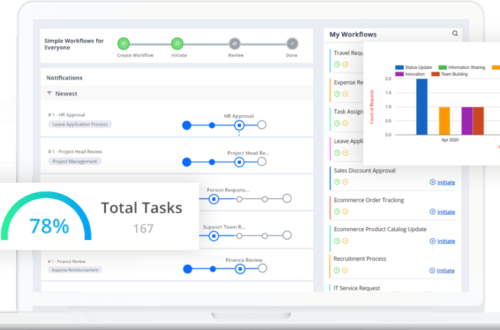
Simplified reporting leads to better data. When you have 100 simple reports, you can see trends. “Hey, we have a lot of trips near the South Gate at 5 PM.” Now you can fix the lighting. You move from being a “safety clerk” to a “safety leader.” Digital tools give you dashboards. They turn those taps on the screen into heat maps of risk. This is where the real value lives.
Automated Workflows: The End of “Did You Fix It?”
The biggest waste of time is the follow-up. Safety leads spend half their day chasing people. “Hey, did you replace that light yet?” “Did the maintenance crew see my report?”
A good compliance management software automates this.
- Trigger: A report is filed.
- Assign: The system automatically pings the maintenance lead.
- Escalate: If it’s not fixed in 24 hours, it pings the Plant Manager.
This removes the “admin burden.” You don’t have to be a nag. The system is the nag. The reporting is simplified because the “path to a fix” is baked in. Workers love this because they see results. When results happen, they report more. It’s a beautiful cycle.
Training That Sticks (Without the Boring Vids)
Reporting is also a training opportunity. If you simplify the process, you can include “just-in-time” learning. If someone reports a chemical spill, the app can instantly show a 30-second video on the correct cleanup kit.
This isn’t just “compliance.” This is real-world safety. By integrating reporting with training, you make the software a tool for the worker, not a weapon for the boss. That’s how you get buy-in. That’s how you change a culture from “us vs. them” to “we keep each other safe.
How to Switch Without the Chaos
Don’t delete your paper forms tomorrow. That’s a recipe for a mess.
- Phase 1: Start with “Near-Misses.” They are low stakes. Get people used to the app.
- Phase 2: Move to “Minor Incidents.” Show the team how fast the fixes happen.
- Phase 3: Go Full Digital. By now, the team will wonder how they ever lived with paper.
Make sure your compliance management software is “user-friendly.” If it looks like it was made in 1995, nobody will use it. It needs to be fast. It needs to work offline. It needs to be simple.
The “Zero-Mistake” Audit
Imagine an auditor walks in. They want to see your records for the last six months. If you have paper, you are sweating. You’re looking for folders. You’re praying nobody spilled coffee on the 301 form.
If you have a digital system, you smile. You hit “Print Report.” You give them a clean, timestamped, professional document. It shows you are in control. It shows you take safety seriously. Auditors love digital systems because they can’t be easily faked. It builds instant trust. That trust can be the difference between a “recommendation” and a “fine.
Conclusion: Simple is Safer
The goal isn’t to have the most paperwork. The goal is to have the fewest injuries. By simplifying your incident reporting, you empower your people. You get more faster data. You stay compliant without the stress.
Stop letting clunky processes put your team at risk. Embrace a system that works as fast as you do. Use compliance management software to handle the red tape so you can focus on the green floor. It’s about being proactive, not just reactive. Your people deserve a system that watches their back, not one that gets in their way.